Human civilization has continuously invented and developed technology in pursuit of a better way of life, and each generation has lived alongside what was considered the most advanced technology of its time. This applied to the twentieth century, when Nam June Paik witnessed the emergence of electronic media - Just as it is today, we are increasingly living alongside artificial intelligence (AI). AI is becoming deeply involved in how we think, perceive, and make decisions, building new forms of interaction between humans and technology and functioning as more than a tool for exchanging information.
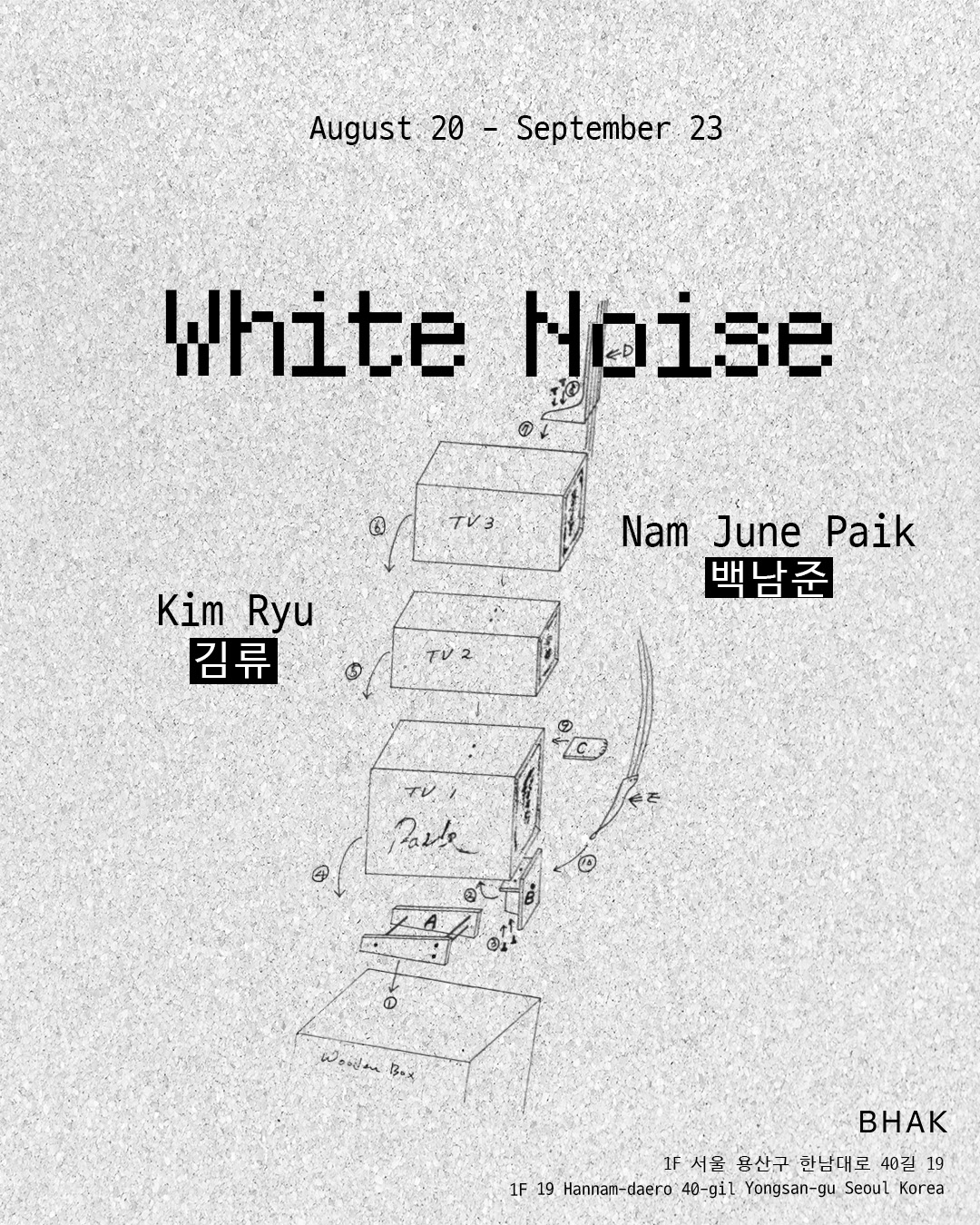
The exhibition Nam June Paik – Kim Ryu: White Noise features two artists who approach technology not simply as a tool, but as a medium through which relationships are formed. The exhibition brings the two artists’ works into dialogue, exploring technology’s impact on human thought processes.
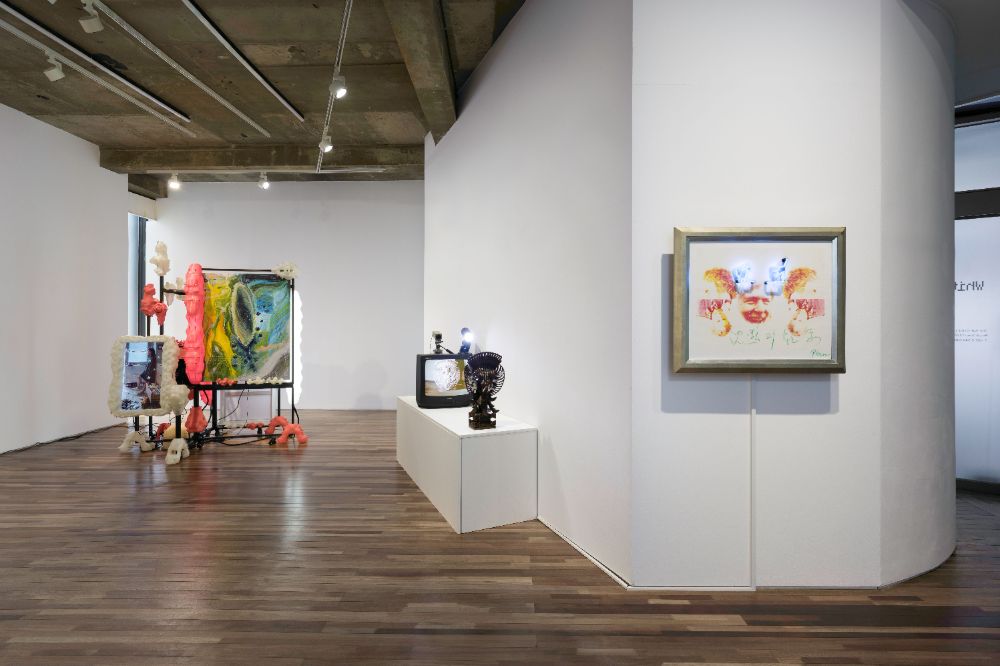
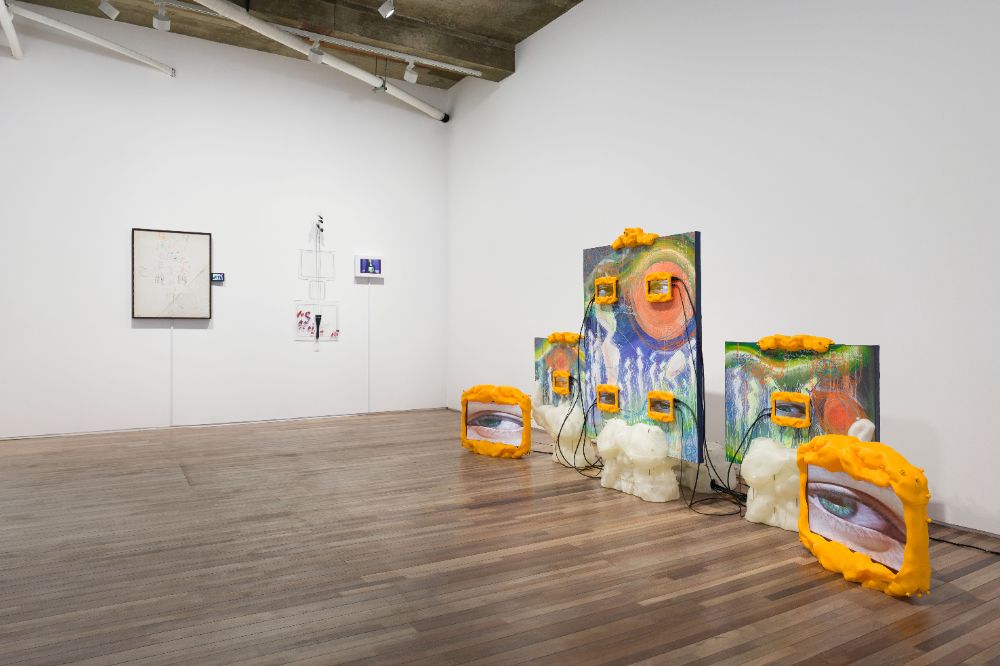
In one corner of the exhibition space, a cello work reminiscent of TV Cello is presented alongside nude drawings and video works. The cello evokes Nam June Paik’s performance with Charlotte Moorman, while the nude drawing suggests the human body interlaced with electronic media. The videos feature footage that was originally shown on the screens of TV Cello. Each piece shows how the human body and technology relate, and how technology takes on new meaning through human awareness and experience.
However, Nam June Paik was not always positive about the relationship between humans and technology, as is apparent in TV Buddha. While Paik emphasized television as both a medium and an everyday object, he was also aware of its capability to shape social consciousness by presenting edited images selected from a particular point of view.
This relationship between humans and technology, defined by an unceasing cycle of real-time transmission and reception, takes on a new dimension in the age of artificial intelligence. AI generates outputs based on information provided by humans, which in turn feeds back into and affects human thought and judgement. In this unbroken cycle, Kim Ryu focuses on how humans engage with technology. Living alongside technology that appears to think like us, Kim observes what humans believe and rely on and where we construct meaning.
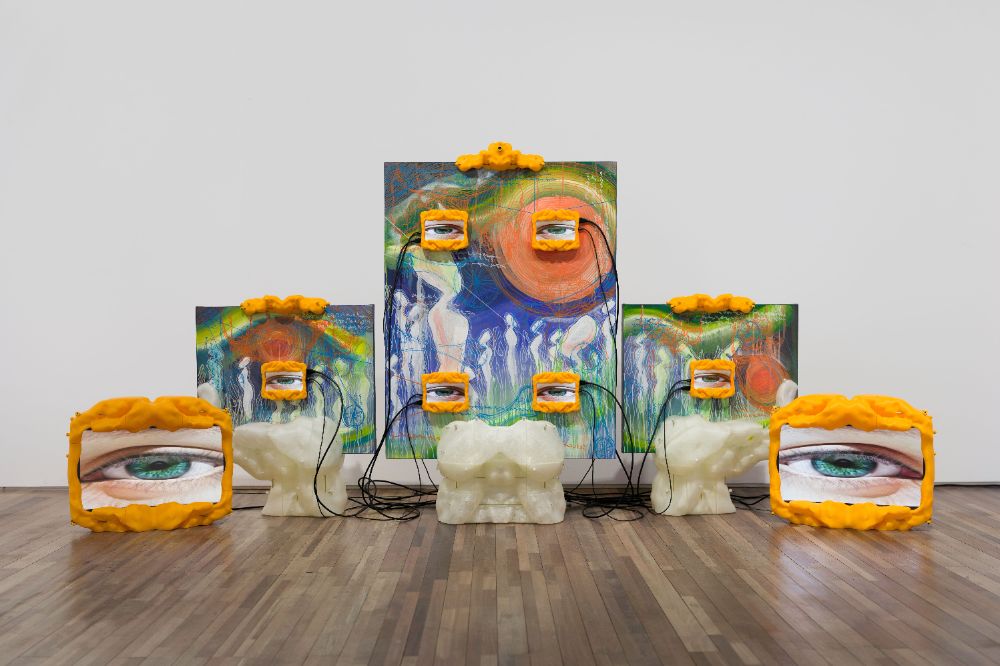
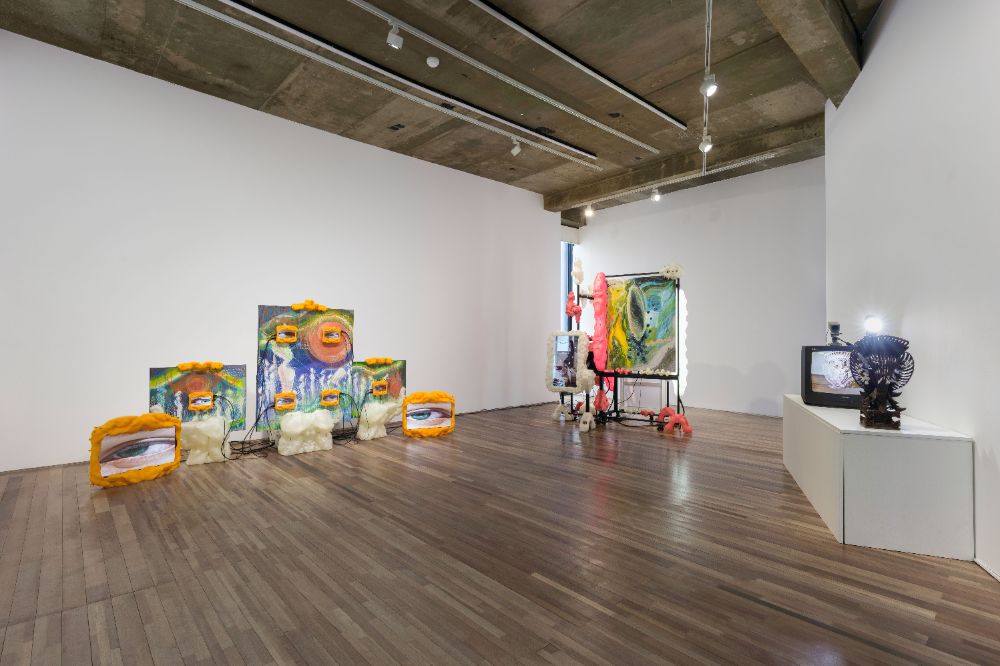
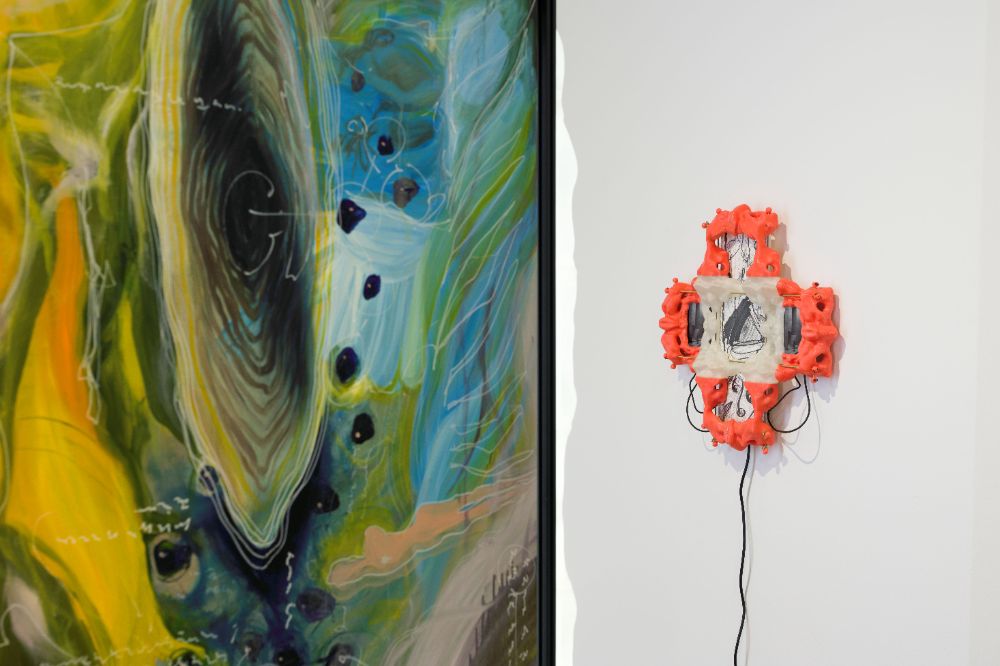
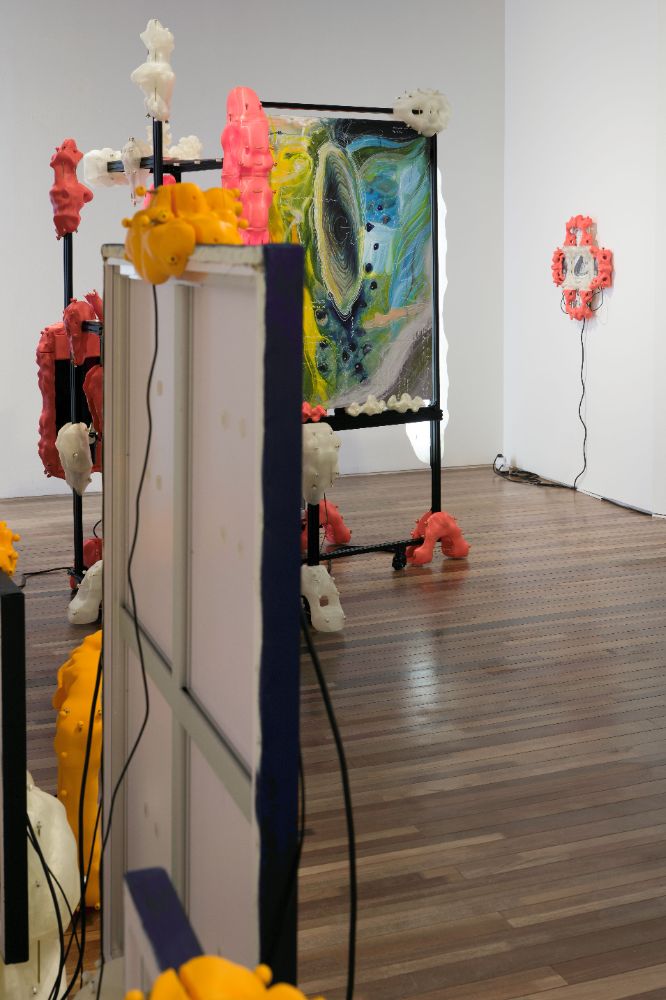
Deus Ex Machina handles these questions. The work appears to respond to the viewer’s movement, with its eye following them through the space. Yet this movement is not genuine tracking, but a predetermined pattern. The work tests our trust in AI and our presumption that technology fully understands and engages with us. This idea extends into Kim’s new machine work, Anonymous Montage_13 Clues and the Agents’ Outputs, the word “anonymous” refers to information from unidentified sources, and “Montage” refers to the process of constructing an image from fragments of collected information, paralleling the way AI processes data to generate its outputs.
The painting, sculpture, AI-generated imagery, and 3D-printed elements are structurally connected, forming a single image while remaining subtly out of sync. Each element results from either human or AI processing based on unknown resources, without referring to the others. Webcams installed throughout the work detect the viewer and generate images that appear and shift rapidly across the screens. Although the visual information is gathered in the same space and under the same conditions, it produces different, often distorted outcomes. Living in an era where fast-produced information and results are prioritized, Kim’s work challenges humans to choose how we will accept the result, what we choose to believe, and how we will be responsible for it. Ultimately, what matters is not a hierarchical relationship of two, but how two distinctive beings work together to open new possibilities. And this was the world that Nam June Paik and Kim Ryu envisioned - where humans and technology are in harmony.
The exhibition title, White Noise, describes a way we perceive the world. Through 4’ 33”, John Cage composed music without a tune, highlighting the sounds of space, audience, and noise, transforming a musical piece into an experience and suggesting listeners rethink their surroundings. Similarly, cutting-edge technology has gradually become part of our daily lives, no longer considered avant-garde.
Nam June Paik – Kim Ryu: White Noise invites us to step back from technology and reconsider our relationship with it. Nam June Paik saw technology as a partner with the potential to shape a new world, while Kim Ryu highlights human agency, judgment, and responsibility in an age increasingly shaped by AI. As AI becomes an inseparable part of our lives, the exhibition asks how humans and technology might coexist and work together, moving beyond a binary view of technology as either promise or threat.