EXHIBITIONS
VIEW ALL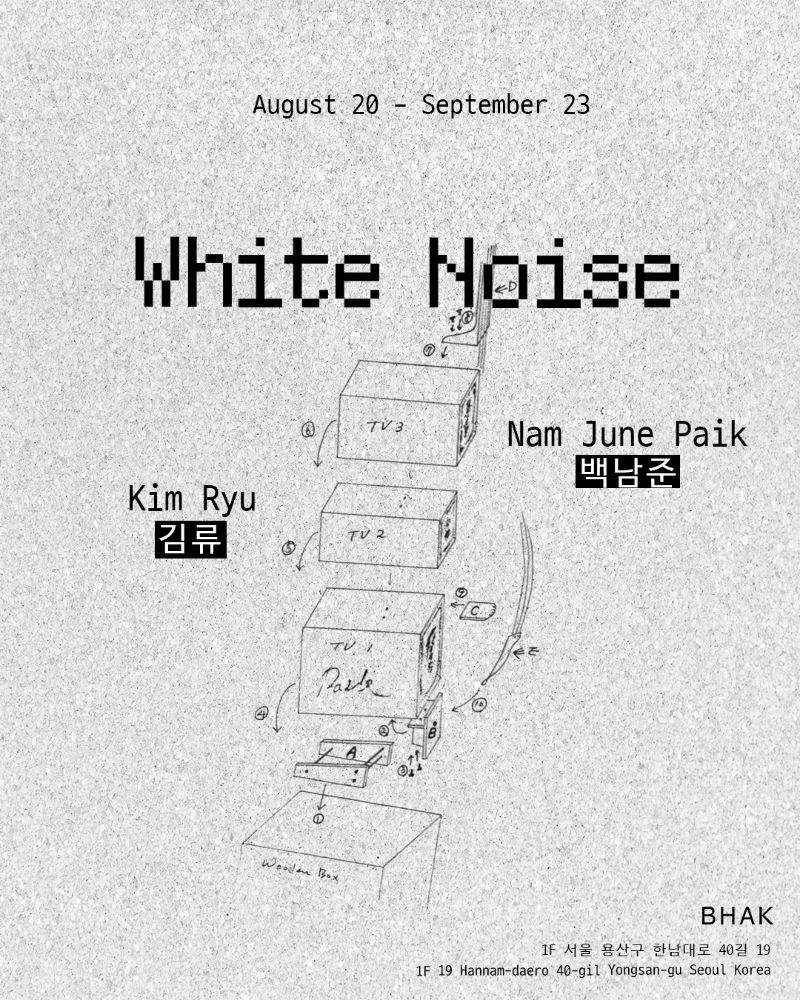
White Noise
Nam Jun Paik, Kim Ryu
Aug 20, 2026 - Sep 23, 2026
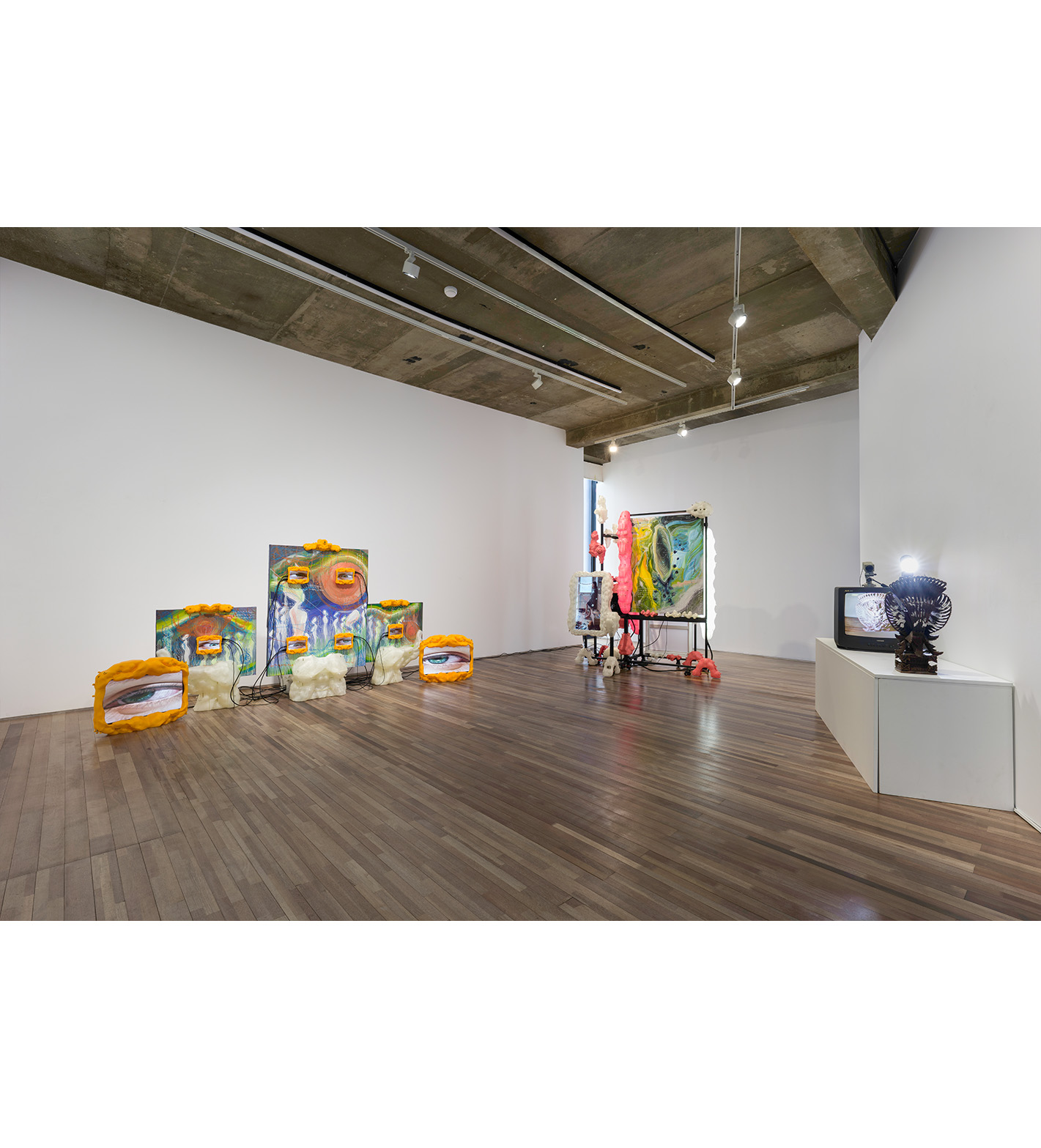
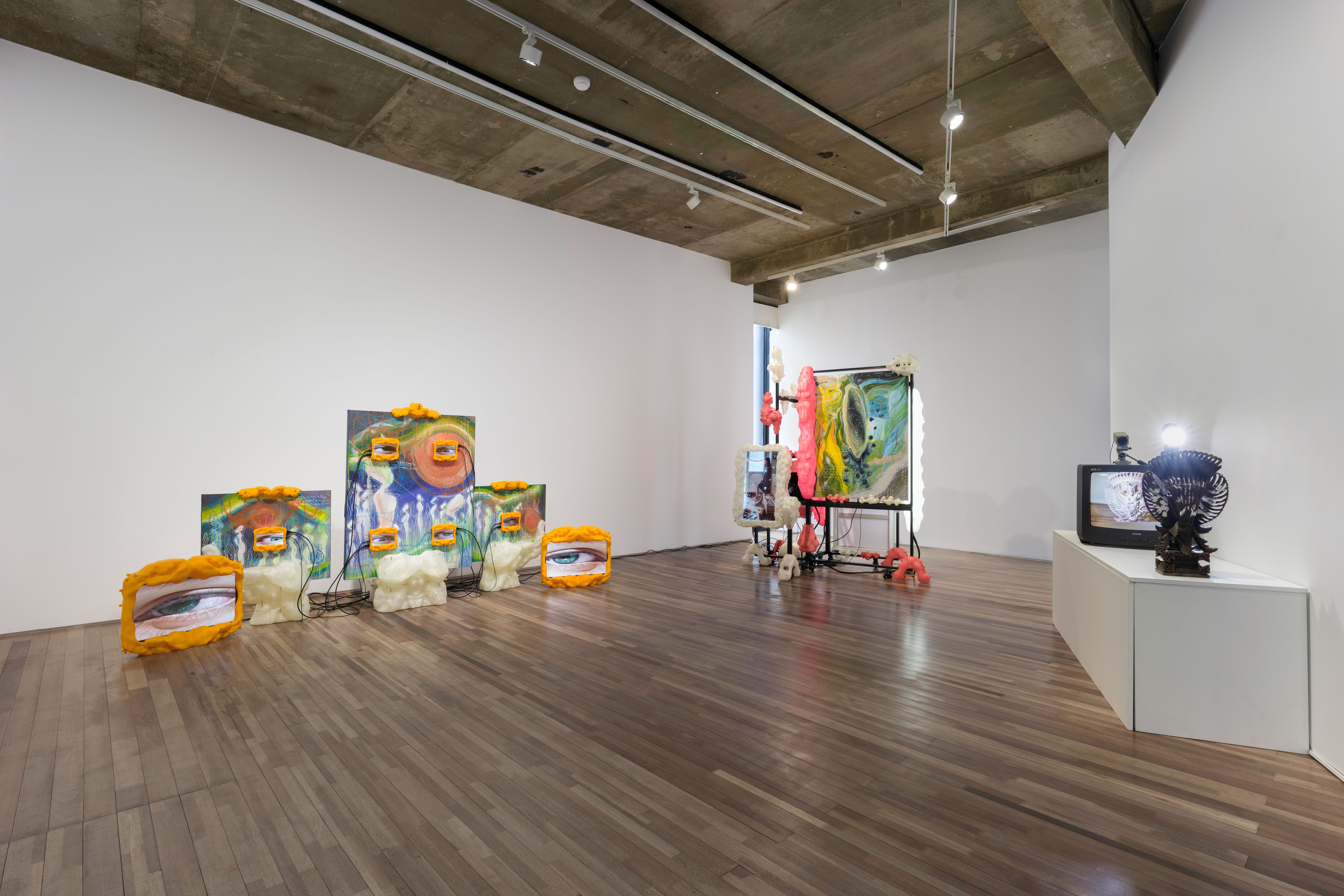
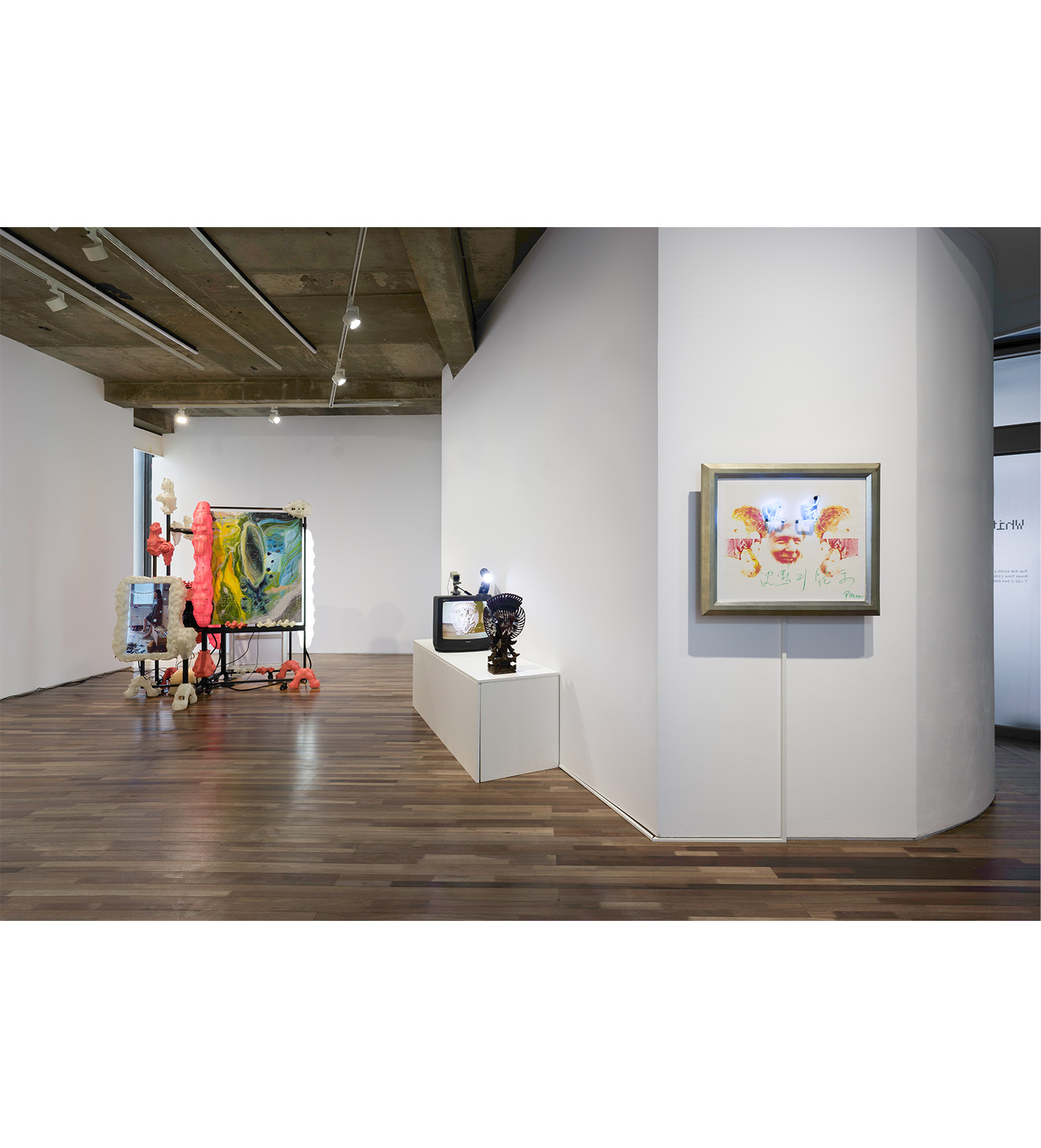
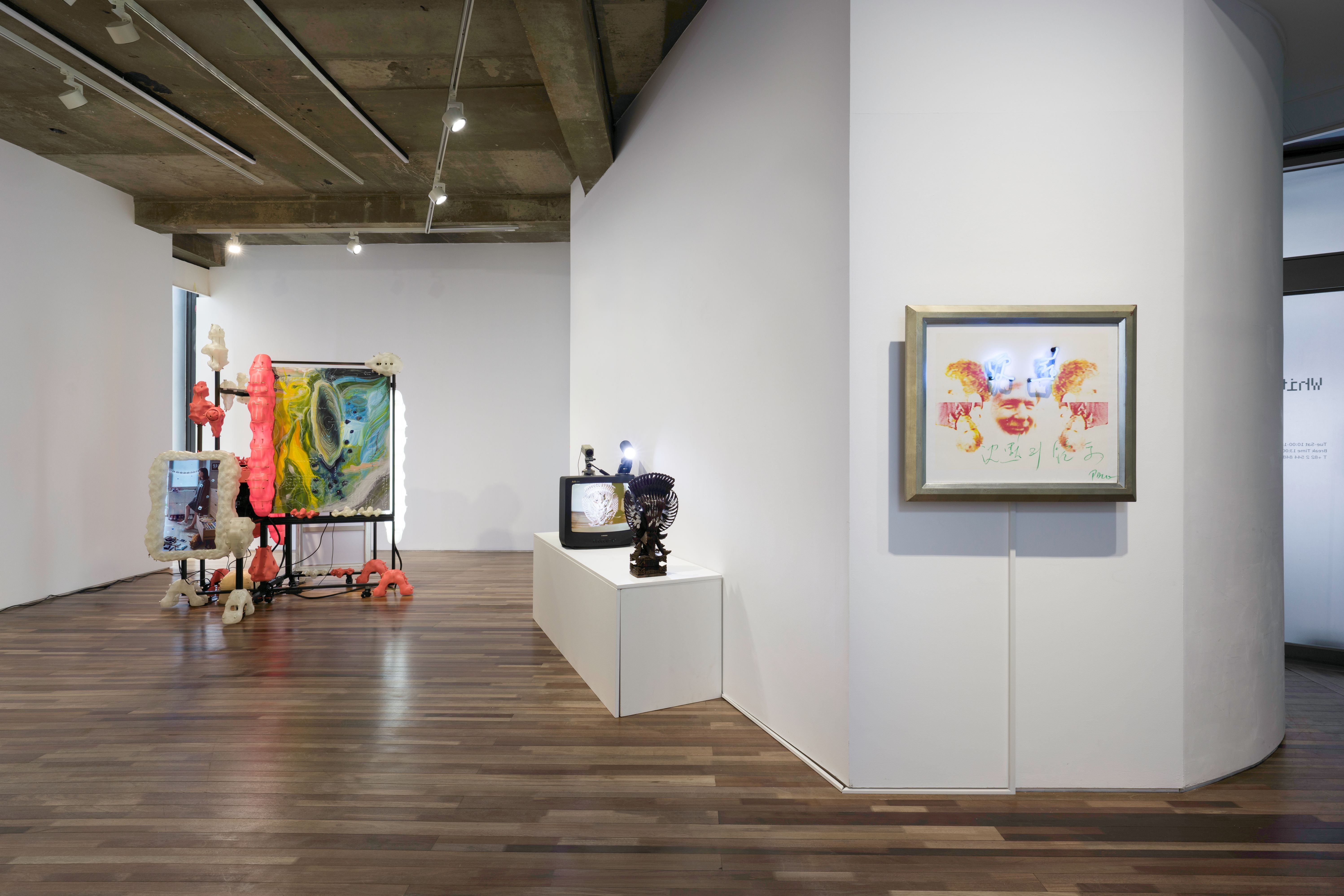
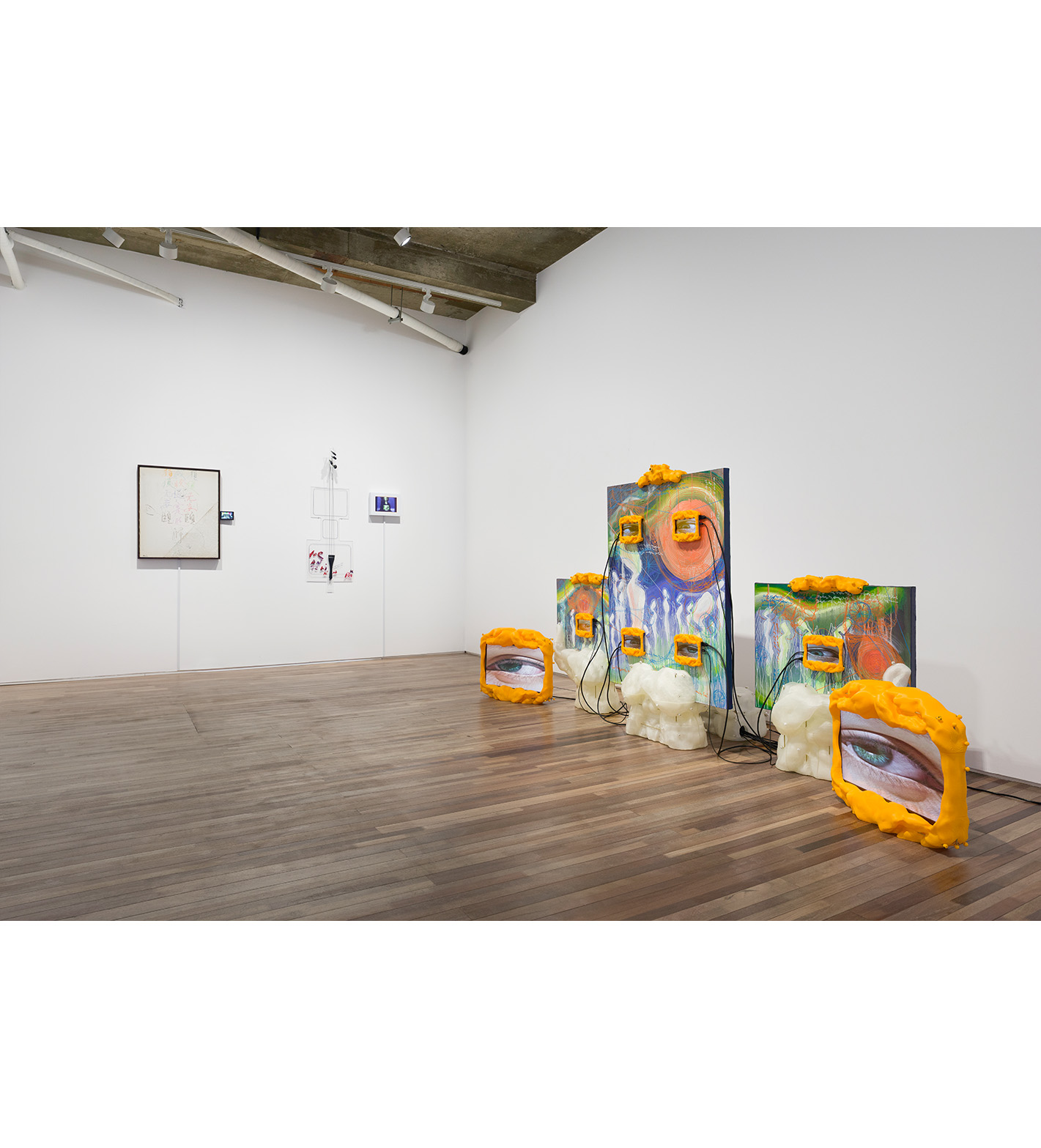
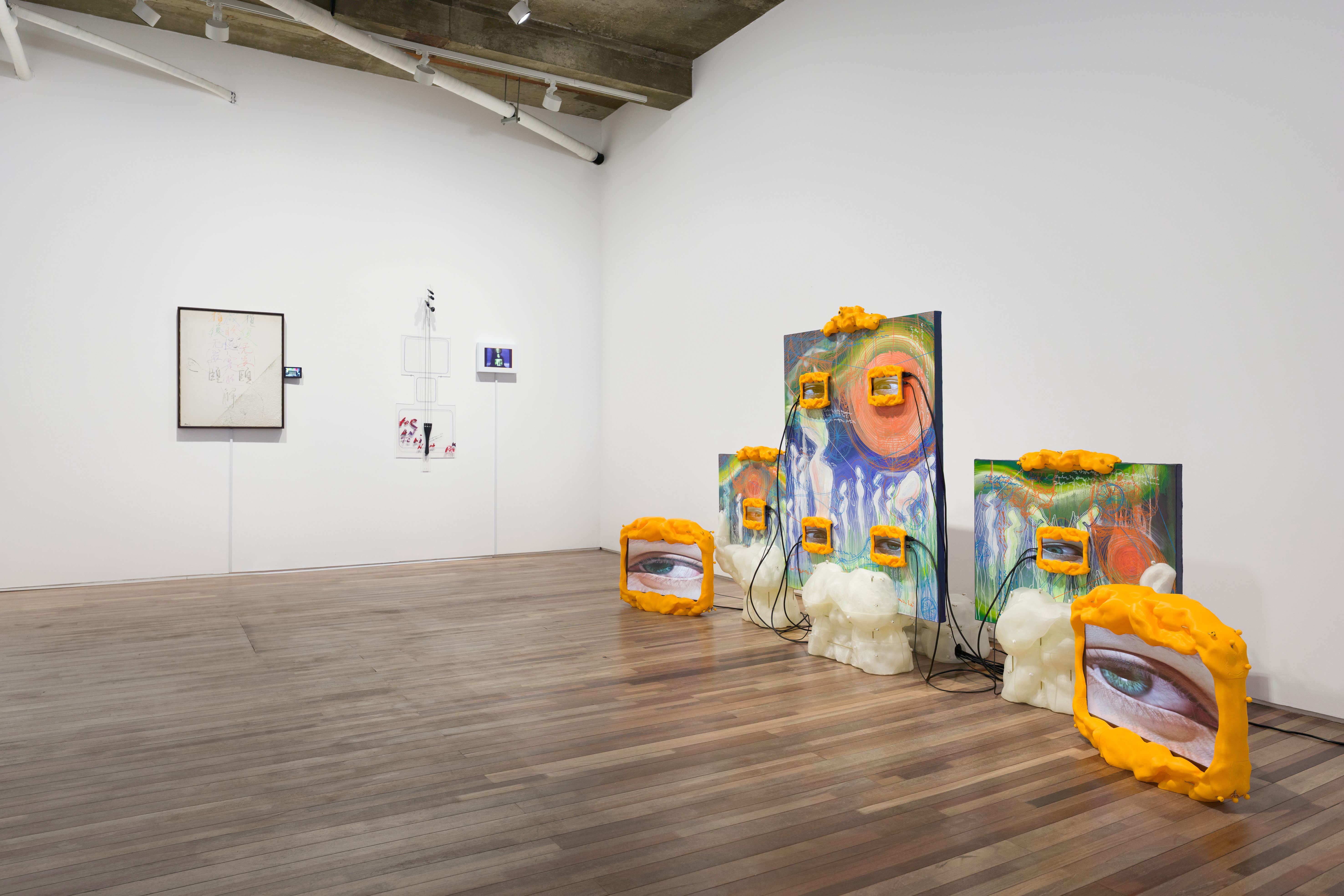
Human civilization has continuously invented and developed technology in pursuit of a better way of life, and each generation has lived alongside what was considered the most advanced technology of its time. This applied to the twentieth century, when Nam June Paik witnessed the emergence of electronic media - Just as it is today, we are increasingly living alongside artificial intelligence (AI). AI is becoming deeply involved in how we think, perceive, and make decisions, building new forms of interaction between humans and technology and functioning as more than a tool for exchanging information.The exhibition Nam June Paik – Kim Ryu: White Noise features two artists who approach technology not simply as a tool, but as a medium through which relationships are formed. The exhibition brings the two artists’ works into dialogue, exploring technology’s impact on human thought processes.In one corner of the exhibition space, a cello work reminiscent of TV Cello is presented alongside nude drawings and video works. The cello evokes Nam June Paik’s performance with Charlotte Moorman, while the nude drawing suggests the human body interlaced with electronic media. The videos feature footage that was originally shown on the screens of TV Cello. Each piece shows how the human body and technology relate, and how technology takes on new meaning through human awareness and experience.However, Nam June Paik was not always positive about the relationship between humans and technology, as is apparent in TV Buddha. While Paik emphasized television as both a medium and an everyday object, he was also aware of its capability to shape social consciousness by presenting edited images selected from a particular point of view.This relationship between humans and technology, defined by an unceasing cycle of real-time transmission and reception, takes on a new dimension in the age of artificial intelligence. AI generates outputs based on information provided by humans, which in turn feeds back into and affects human thought and judgement. In this unbroken cycle, Kim Ryu focuses on how humans engage with technology. Living alongside technology that appears to think like us, Kim observes what humans believe and rely on and where we construct meaning.Deus Ex Machina handles these questions. The work appears to respond to the viewer’s movement, with its eye following them through the space. Yet this movement is not genuine tracking, but a predetermined pattern. The work tests our trust in AI and our presumption that technology fully understands and engages with us. This idea extends into Kim’s new machine work, Anonymous Montage_13 Clues and the Agents’ Outputs, the word “anonymous” refers to information from unidentified sources, and “Montage” refers to the process of constructing an image from fragments of collected information, paralleling the way AI processes data to generate its outputs.The painting, sculpture, AI-generated imagery, and 3D-printed elements are structurally connected, forming a single image while remaining subtly out of sync. Each element results from either human or AI processing based on unknown resources, without referring to the others. Webcams installed throughout the work detect the viewer and generate images that appear and shift rapidly across the screens. Although the visual information is gathered in the same space and under the same conditions, it produces different, often distorted outcomes. Living in an era where fast-produced information and results are prioritized, Kim’s work challenges humans to choose how we will accept the result, what we choose to believe, and how we will be responsible for it. Ultimately, what matters is not a hierarchical relationship of two, but how two distinctive beings work together to open new possibilities. And this was the world that Nam June Paik and Kim Ryu envisioned - where humans and technology are in harmony.The exhibition title, White Noise, describes a way we perceive the world. Through 4’ 33”, John Cage composed music without a tune, highlighting the sounds of space, audience, and noise, transforming a musical piece into an experience and suggesting listeners rethink their surroundings. Similarly, cutting-edge technology has gradually become part of our daily lives, no longer considered avant-garde.Nam June Paik – Kim Ryu: White Noise invites us to step back from technology and reconsider our relationship with it. Nam June Paik saw technology as a partner with the potential to shape a new world, while Kim Ryu highlights human agency, judgment, and responsibility in an age increasingly shaped by AI. As AI becomes an inseparable part of our lives, the exhibition asks how humans and technology might coexist and work together, moving beyond a binary view of technology as either promise or threat.
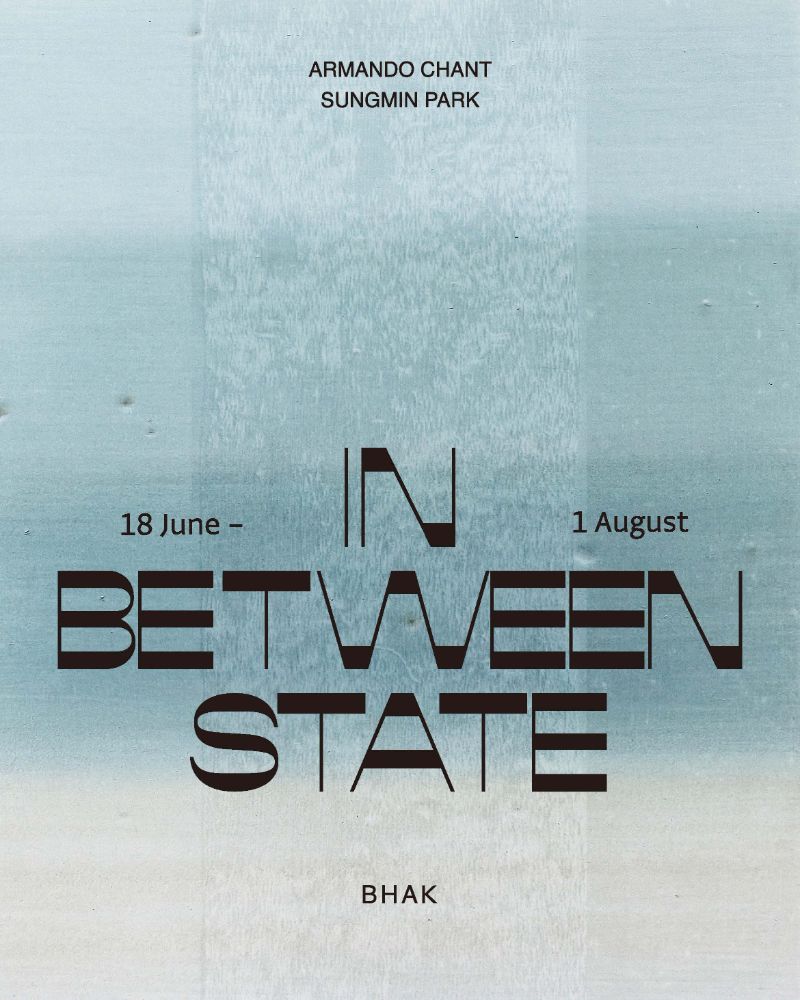
In Between State
Armando Chant & Sungmin Park
Jun 18, 2026 - Aug 1, 2026
What does it mean to see? Vision is often the first sense through which we encounter the world, arriving before language and preceding explanation. Yet the understanding it offers is not necessarily intellectual or analytical. Rather, it emerges through embodied perception—a sensory experience that settles within us before it can be articulated. In Between State brings together the works of Armando Chant and Sungmin Park, two artists whose practices explore the act of perception itself and the ways in which images are continually dismantled and reconstituted through material and sensory processes.Although distinct in form and approach, both artists engage in a sustained investigation of transformation. Their works emerge through repeated acts of construction and dissolution, challenging fixed images and opening them to new possibilities of meaning and experience.Armando Chant begins by isolating fragments from photographic scenes and reconfiguring them into unfamiliar spatial and temporal landscapes. The diverse materials and techniques employed throughout his practice extend beyond formal experimentation; they function as agents in the creation of new sensory worlds. On the canvas, disparate materials encounter one another in a delicate balance of tension and harmony, generating surfaces that oscillate between image and sensation.In Chant’s embroidered works, hand-stitched threads traverse linen surfaces through repetitive gestures, tracing time and space through the body. The tactile quality of these works transforms physical labor into visual experience. Similarly, his use of staining techniques introduces a sense of diffusion and permeability. Unlike embroidery, which sharpens and defines the image, dyed surfaces blur visual certainty, encouraging multiple modes of seeing. Through cycles of marking and erasure, construction and collapse, clarity and obscurity, Chant’s paintings move beyond what is immediately visible, revealing latent images and perceptual possibilities. The resulting works are accumulations of duration and spontaneity, control and chance, materiality and sensation.Sungmin Park’s paintings, by contrast, emphasize the flatness and abstraction of the pictorial surface. Yet beneath their refined appearance lie densely layered accumulations of matter, memory, and perception. Motifs that appeared explicitly in earlier works—such as ceramics and ice—have gradually undergone transformation, becoming abstract visual structures rather than recognizable objects. The meticulously rendered textures of ceramic surfaces and the intersecting vertical and horizontal brushstrokes simultaneously evoke material presence and establish compositional order. Fields of color both define and transgress boundaries, reflecting the mutable nature of ceramic and ice while generating rhythms of absorption and reflection across the canvas. Layers of urethane and resin, applied with deliberate intention, produce matte or glossy surfaces that further emphasize states of fluidity and transformation. In Park’s work, the more intensely a subject is articulated, the more it dissolves into abstraction, creating a productive tension between representation and non-representation.The works of both artists are therefore less concerned with fixed structures than with ongoing processes. Rather than presenting completed forms, they inhabit states of continual becoming. Traces left upon the surface resist resolution into singular images, oscillating instead between emergence and disappearance, concentration and dispersion. As viewers navigate these shifting conditions, painting unfolds not as a static image but as an ever-expanding perceptual landscape. The exhibition title, “In Between State”, reflects this condition and invites reflection on how we experience and understand the world. Here, the notion of “between” signifies the spaces that separate and connect representation and abstraction, materiality and immateriality, memory and sensation. “State” refers not to a fixed condition but to a dynamic field in which forms, perceptions, and meanings intersect and evolve.Perhaps seeing is not an act of fully comprehending or naming what stands before us. Perhaps it is an act of remaining within the continual flow of perception itself. In this space, painting ceases to function merely as a medium of representation and instead becomes a site where the world is encountered through sensation. Following the subtle resonances and lingering vibrations that arise there, “ In Between State “ opens a space for imagining new ways of relating to the world around us.Text l Sohee Lim (BHAK Curator)
NEWSLETTER
Stay up-to-date on gallery exhibitions, news and events.